
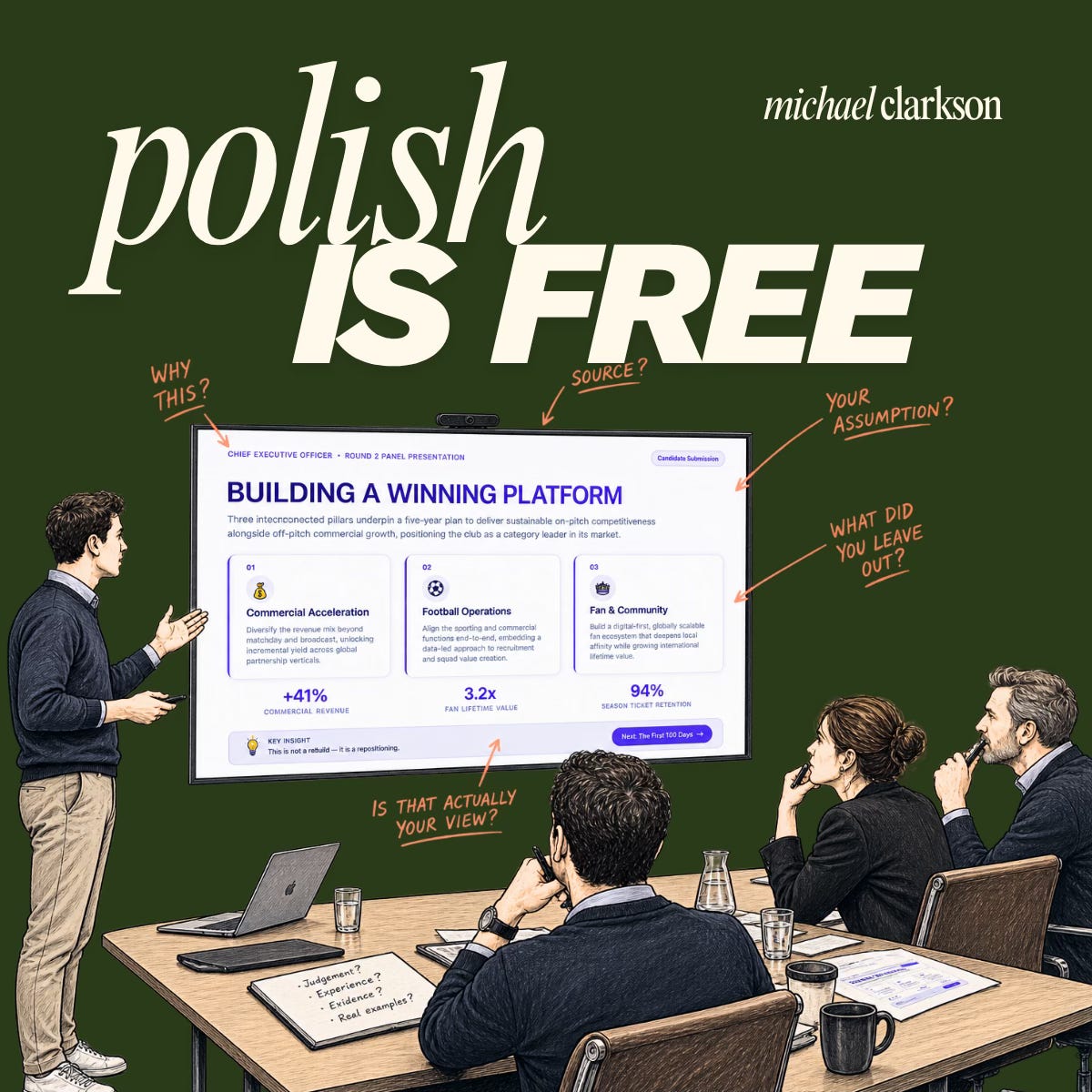
Candidates can talk into their phone for five minutes and have a structured deck before their morning brew is made. Polish is free now... well, £18 a month if you upgrade your Claude.
We regularly ask candidates to produce a piece of work during search processes. It helps reveal how someone thinks, where they go for information, what they leave out and how they narrate a decision. Even their reaction to the ask is telling.
That’s all getting harder with the adoption of AI tools. Structuring information, designing slides, copywriting, selecting headlines, turning a load of information into something that looks like an insight. It’s increasingly automated and I’m seeing examples every week of presentations looking more and more similar. Actually, similarly sterile.
But after reflecting on my recent vendetta against ChatGPT slides, I think presentation tasks quietly rewarded the wrong thing at times anyway. Fifteen years of judgement and poor deck-building skills could get marked down, while confident delivery over fairly thin thinking got marked up. Take production quality out and what’s left is what we always claimed to be measuring. So I think the weight now moves to the defence of it.
It’s similar to why Bezos got rid of PowerPoint presentations at Amazon and replaced them with written memos. We adopted 2 and 6-page memos at Catapult to structure debate and decision-making. I hated writing them at first because they’re SO HARD to write. You can’t hide behind a nice graphic or skip over the difficult bit. You have to make the argument, defend it and actually try to influence a decision. After a year of constantly writing them, and maybe a few tears (no, genuinely!), they taught me that slides can sell dreams with very little substance.
And that’s probably the bit I’m coming back to with AI and it’s impact on exec search. You can generate a deck in five minutes. You can’t generate the judgement, experiences and stories that should sit behind it.
So, a message for candidates: If you’re going to use AI for decks, please bring your own content and critical thought. Know why something is on page four. Know what you left out. Know which assumption you’re least confident in. And have some actual stories from your career that explain why you think what you think. Also, at least tell Claude which typefaces, colours and style you want so yours doesn’t look exactly like everybody else’s.
And for those hiring: Create a few decks using AI yourself and you’ll very quickly start spotting the fingerprints. Then look past the polish. Don’t assume the insights are the candidate’s, don’t even assume the words are theirs. Ask harder questions. Get them away from the deck and into the stories behind it.
P.S. Even if the defence is now more important, I still think most AI-generated decks (and LinkedIn posts!) are largely terrible and you can spot them from a mile away. Those who can use the tools without losing their creativity, and more importantly fill the output with their own experiences, opinions and stories, will be the ones who stand out.